
Blog
Market power: a balance for large consumers and suppliers.

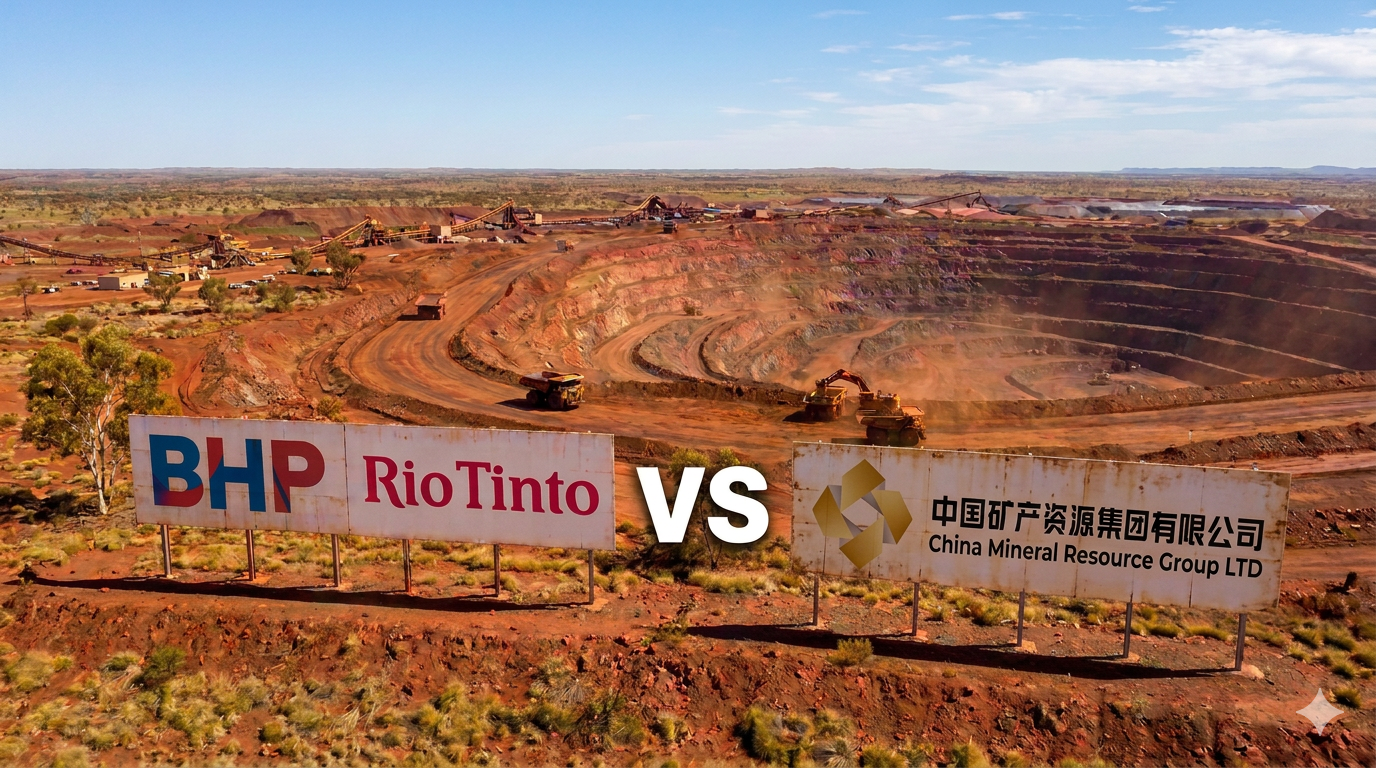
The international market for iron ore is undergoing a process of change. Change that will affect the negotiated price of iron ore. From the late 1990s, continuous industrial expansion in China drove large increases in demand for iron ore. Iron ore is used to produce a variety of steel products. In line with China’s reduced GDP growth projections for 2026 (4.5-5.0%), China’s demand for iron ore is weakening. This change in market conditions is helping to drive consolidation of negotiating power. The largest global buyer (China) and suppliers of iron ore (Australian firms BHP and Rio Tinto) have actively restructured their organizational operations to boost their negotiating power and profit margins. These changes are a good example of the use of market power to effect market prices.
Market Structures
Either a supplier or consumer may seek to increase their market power to strengthen their ability to influence the market price. The focus is often directed to the market power held by suppliers – monopoly (1 supplier), oligopoly (two or more suppliers) and monopolistic competition (products are differentiated across suppliers to help them generate perceived monopoly power) when teaching economics. In these cases, prices are frequently driven up and quantity supplied decreased. Inefficiencies result. However, when there is only one buyer and many suppliers – monopsony market, this market power can also create inefficiencies: reduced incentive to innovate, reduced supply and shortages. Classic examples of monopsony markets are in labor markets and in pharmaceutical markets when a national government runs a large subsidized drugs scheme.

Consumer market power
Rapid Chinese industrialization since the late 1990s drove consumption. Domestic demand for iron ore in China has been driven, in part, by China’s expanding urban housing market (Li, 2025). China buys 70% of the world’s seaborne iron ore (Zhen, 2025). China’s iron ore demand is predominantly met by large Australian mining companies – BHP and Rio Tinto. Australia supplies 29% of the world’s iron ore (Gonzalez and Cyrus, 2026). Iron ore mined in the western part of Australia is high quality, relatively close to China and it’s supply reliable. However, from 2022 China focused its market power through the creation of ‘import trade desk’.
In 2022, the Chinese government created the China Mineral Resources Group (CMRG) in an effort to centralize negotiation of iron ore supply contracts. This centralization strategy is designed to leverage China’s position of the largest buyer of iron ore and increase it’s negotiating power by requiring domestic firms to follow centrally negotiated contract prices and terms.
A market characterized by a single consumer is referred to as a monopsony market. A single consumer holds absolute (100%) market power. This market power is typically used to drive down prices.
BHP recently experienced a negotiated stand-off with the CMRG. Reports suggest that the 2026 contract price for BHP iron ore will be lower than the industry benchmark, the prices received by competitors.
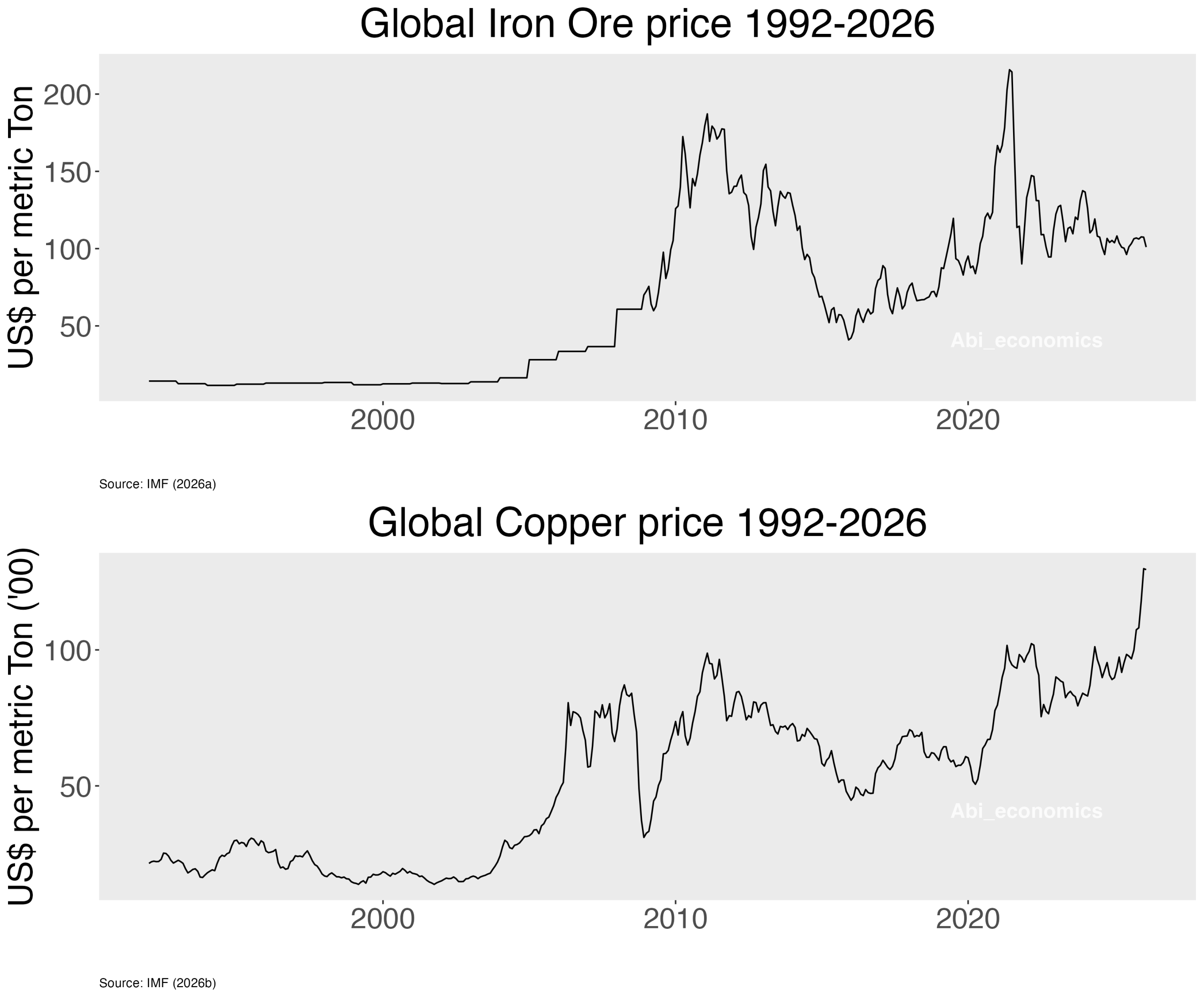
“Although BHP’s average iron ore price of $US84 ($124.70) a tonne for the December quarter was 4 per cent higher than a year earlier, it marked a distinct discount to industry benchmark iron ore pricing, said Kaan Peker, an analyst at RBC Capital Markets. Rival producers, such as Rio Tinto, were fetching prices in line with or above the benchmark, he added.” (Toscano, 2026)
In addition to a desired lower iron ore price for 2026, CMRG is reportedly seeking to have a smaller amount of the contract denoted in US dollars. Instead, requiring BHP to trade in RMB. The spot sale of iron ore cargo at Chinese ports has long been conducted in RMB. In such cases, there exists clear value to both sellers and buyers. The difference with the reported BHP negotiations is that the denomination of contracts in RMB is that China using its market power to force contract terms in their favour.
“As the Chinese news outlet Caixin put it: “China’s iron ore buyers are done playing price-taker. A deadlocked BHP deal reveals a new strategy: negotiate collectively, pay in yuan (Chinese currency), and set the rules.”” (Li, 2025)
Supply-side coordination
The timing of a Rio Tinto and BHP partnership in mining operations in Western Australia during these CMRG – BHP contract negotiations is hardly coincidental. In January 2026, the two companies communicated an agreement to mine up to 200 million tonnes of iron ore from neighboring mines in Western Australia (Rio Tinto, 2026). This agreement would see the competitors share infrastructure as a means of lowering costs. This agreement follows a 2023 partnership to mine Western Australian iron ore.
The production partnership between the two Australian mining firms does not constitute collusion. Collusion is focused on coordinating production in order to increase the market price. Cooperation between two firms may relate to a wide range of efficiency enhancing activities that does not involve explicit production setting limits. Such activities include sharing infrastructure, coordinating and sharing research and development. The goal of such coordination is often limited to lowering costs. However, excessive coordination may lay lead to suspicions of collusion in a given market.
In the context of the changing iron ore market the balancing of market power held by China and BHP and Rio Tinto may be globally beneficial. Pressure to lower prices may promote production efficiency gains. While the protecting of minimum non-economic profit margins may stimulate innovation and technological development.
New Directions for BHP
As a side note: BHP has appointed a new CEO effective from July 2026. The appointment of Mr. Brandon Craig signals prioritization of expanded commercial activity in the Americas (US, Chile and Argentina) to mine copper. Mr. Craig has previously led BHP’s iron ore business and the company’s Americas operation.
“”I do think it’s really, really important that we continue to strengthen the relationships with our customers, particularly in China,” he [Mr. Craig] said, adding that senior BHP leadership would be visiting the top commodity consuming nation in the next few weeks” (Burton, 2026).
The joint venture between Rio Tinto (majority owner) and BPH (minority) in the US Resolution mineunderscores a gradual shift away from an over-reliance on iron ore for BHP. The Resolution mine is predicated to supply 25% of the US’ copper demand. Mr. Craig has affirmed the company’s focus on copper, iron ore, potash (potassium based fertilizer) and coal.
References
Australian Associated Press (2025). Albanese hopes China’s reported BHP iron ore ban ‘very much short-term’ as ASX dips. The Guardian (International), 01.10.2025. Accessed on 14.03.2026. https://www.theguardian.com/business/2025/oct/01/albanese-hopes-chinas-reported-bhp-iron-ore-ban-very-much-short-term-as-asx-dips
Burton, M. (2026). BHP’s newly appointed CEO says to focus on Americas in new age for mining. Reuters, 16.03.2026. Accessed on 25.03.2026. https://www.reuters.com/business/energy/bhp-names-brandon-craig-ceo-succeeding-mike-henry-2026-03-17/
Dziedzic, S. and Li, Y. (2025). BHP vs China Inc: What the iron ore dispute says about Australia’s present and future. Australian Broadcasting Corporation, 17.10.2025. Accessed on 14.03.2026. https://www.abc.net.au/news/2025-10-17/what-bhp-china-iron-ore-dispute-means-to-australia/105901692
Gonzalez, A. and Cyrus, C. (2026). Australia’s iron ore machine faces a structural test. Mining Technology, 09.03.2026. Accessed on 14.03.2026. https://www.mining-technology.com/features/australias-iron-ore-machine-faces-a-structural-test/?cf-view
International Monetary Fund. (2026a). Global price of Iron Ore [PIORECRUSDM], retrieved from FRED, Federal Reserve Bank of St. Louis. Accessed on 25.03.2026. https://fred.stlouisfed.org/series/PIORECRUSDM
International Monetary Fund. (2026b). Global price of Copper [PCOPPUSDM], retrieved from FRED, Federal Reserve Bank of St. Louis. Accessed on 25.03.2026. https://fred.stlouisfed.org/series/PCOPPUSDM
Rio Tino (2026). Rio Tinto and BHP explore collaboration to mine up to 200 million tonnes of Pilbara iron ore. Media Release, 15.01.2026. Accessed on 14.03.2026. https://www.riotinto.com/en/news/releases/2026/rio-tinto-and-bhp-explore-collaboration-to-mine-up-to-200-million-tonnes-of-pilbara-iron-ore
Zen, Han (2025). China Makes First Move to Challenge Iron Ore Pricing Power. Yet Reality Lags Online Hype. China Global South, 14.10.2025. Accessed on 14.03.2026. https://chinaglobalsouth.com/2025/10/14/china-bhp-iron-ore-pricing-power-rmb-trade